The Origin of a Sweet
"Zenzai" — sweet red beans simmered soft and sweetened with sugar — is beloved across Japan. According to tradition, the name's origin traces back to the Kamiari Festival in Izumo. The red bean dish offered and served during the festival was called "jinzai-mochi." As the story commonly told goes, the pronunciation "jinzai" shifted through the local Izumo dialect to "zunzai," and eventually to "zenzai."
This "jinzai" is said to have eventually spread to Kyoto, where it became widely known under the name "zenzai" as it was served at temples. Drawing on this tradition, the Japan Zenzai Society was founded in Izumo City, and it continues its efforts to promote Taisha-cho, Izumo City, as the "birthplace of zenzai."
Izumo's Signature Noodle
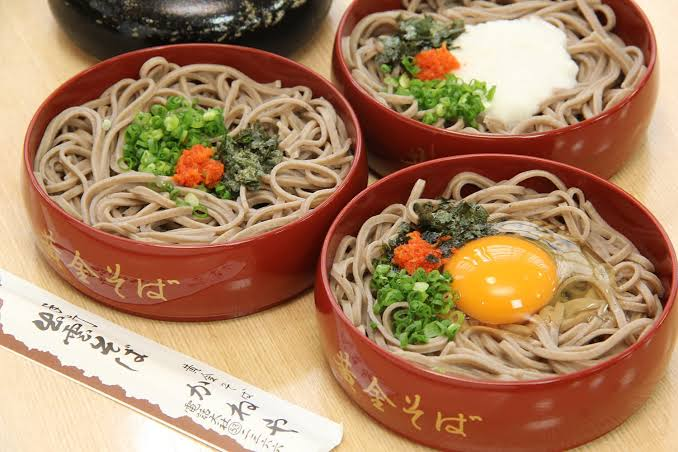
Izumo soba is a regional style of buckwheat noodle native to the Izumo area of Shimane Prefecture. Its defining feature is that the buckwheat groats are stone-ground together with their husk, the thin layer just beneath the outer shell. This gives the noodles a darker color, a stronger aroma, and, it's said, a higher nutritional value than ordinary soba.
The way it's eaten is distinctive too. "Warikko soba" — soba served in a stack of round lacquerware trays, with the dipping sauce poured directly over the noodles — is the signature style of Izumo soba. Countless soba shops line the streets of Izumo City, especially in Taisha-cho, the shrine town before Izumo Taisha, and many visitors pair a bowl with their New Year's or Kamiarizuki visit to the shrine.
Gifts of a Brackish Lake
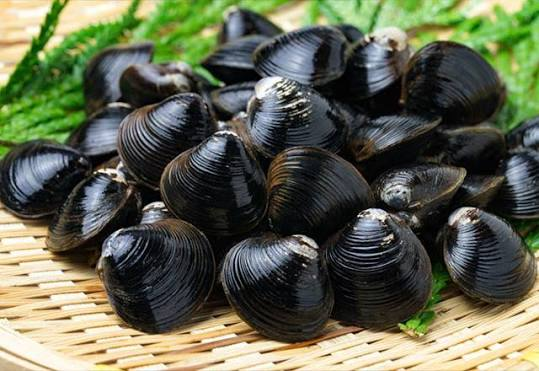
Lake Shinji, spreading east of Izumo City, is a brackish lake where seawater and fresh water mingle. This distinctive environment nurtures abundant fishing grounds, home to Japanese basket clams (yamato-shijimi) whose catch ranks among the highest in Japan. The lake's shijimi fishery, a tradition dating back to the Edo period, remains an indispensable ingredient on tables across Izumo and Matsue today.
Besides shijimi clams, Lake Shinji is known for a set of representative seafood called the "Shinjiko Shichichin," the Seven Delicacies of Lake Shinji: Japanese seaperch, freshwater shrimp, pond smelt, icefish, carp, eel, and mitten crab. The bounty of water and earth still runs deep through the tables of Izumo, a land said to welcome the gods themselves.
Read Next
Izumo Taisha, layered with 1,300 years of myth and history, has also gathered no shortage of "urban legends" told online — rumors about the shimenawa rope, bold interpretations of the great hall's mystery, and more. Let's take a look at this slightly different page, where we set these rumors side by side with the documented facts.
Read Urban Legends & Mysteries →